Complete Outfits for Men: Ten Looks, Priced Whole
Ten complete looks at real prices, from $409 head to toe, grouped by what you are actually doing, plus the five slots every outfit has to fill and why the same twenty-three garments cover all ten.
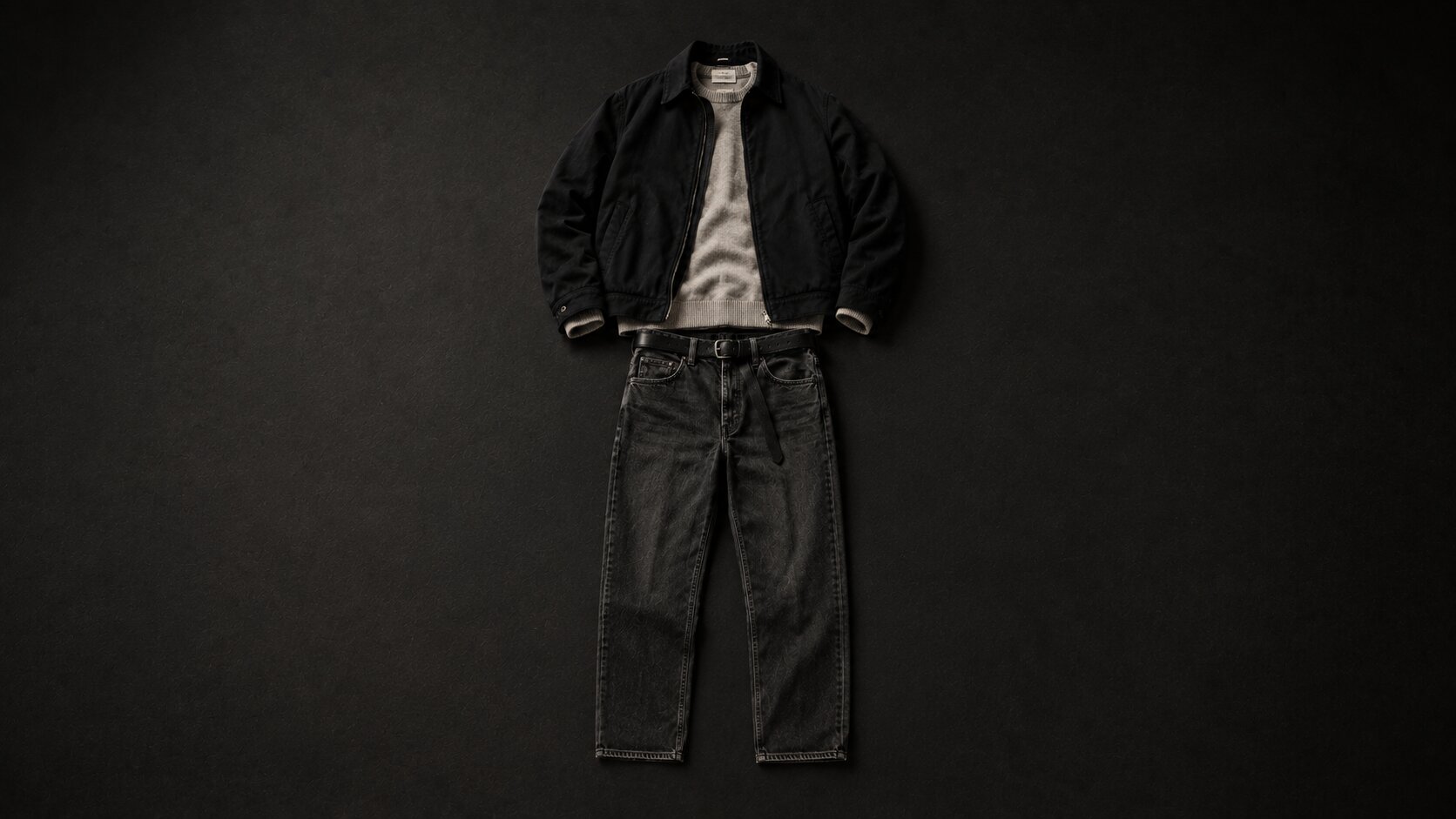
A complete outfit is four slots, not two: a top, a bottom, shoes, and one piece layered over the top. Add a belt when the shirt is tucked and nothing covers the waist. Ten complete looks are below, every garment a real listing at live catalog prices, from $409 for the cheapest head to toe up to $1,604 for the one that clears a dress code on an invitation. Twenty-three garments fill all ten, because outfits that work share pieces.
The looks come first, grouped by what you are doing, then the system behind them. The number worth staying for is at the bottom: the same ten outfits cost $2,185 less bought as a set than bought one at a time.
10
Complete looks below, priced whole, head to toe
23
Garments filling the 36 slots across all ten outfits
$409
Cheapest complete outfit on this page, shoes included
Casual: three looks that need no explanation
Every piece here is a real listing from the MVRCK catalog, which is mine, with live stock behind it. Totals are head to toe and include the shoes.
The first two matter more than the rest. The second look is the first look with one garment added. Nothing else changes, and that addition is the whole difference between getting dressed and having an outfit.
Saturday · $500
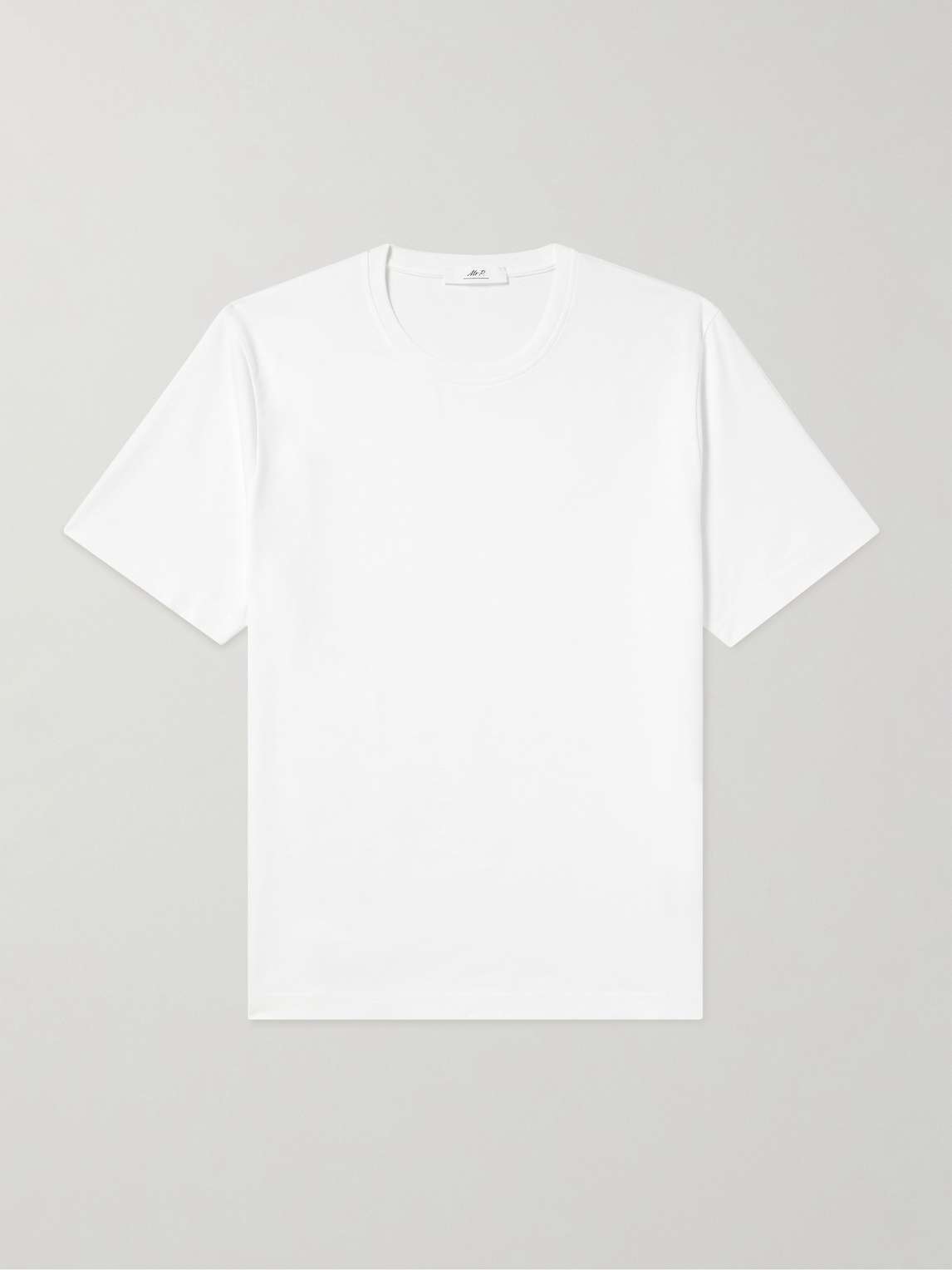
White T-shirt, blue jeans, white leather sneakers
Three pieces, and the one nearly every man already owns some version of. It is here because it is the floor: nothing is wrong, nothing is trying, and it is the look that most rewards the single addition below. Straight leg rather than slim, and a mid wash rather than black or a heavy fade, because both choices are what keep it from dating.


Saturday, finished · $767
Green field jacket over the same T-shirt, jeans and sneakers
The identical outfit with one garment added, and the difference is the whole argument of this page. A field jacket is the cheapest way to move a look from clothes to an outfit: it fills the layer slot without asking anyone to read it as tailoring, and green sits far enough from both the white tee and the blue jean to register as a third thing rather than a fourth version of the same idea.

Weekend away · $621
Denim jacket, navy striped tee, army-green chinos, navy suede sneakers
Two nights away in one bag. Denim on chinos rather than denim on denim, which is the mistake this look exists to avoid, and a stripe instead of a plain tee because a pattern is the cheapest way to stop a four-piece outfit reading as a uniform. Green and navy is the pairing that does the most work in the least obvious way.


Smart casual: the four pieces that cover most days
The widest band in a modern week, and the one most men get wrong by aiming too high. A shirt, a chino, a belt and a leather shoe is the whole answer, and at $472 it is the cheapest office-capable outfit on this page.
The pair below repeats the move the casual looks made, with one difference: adding the knit takes the belt out, because nothing sees it under a crewneck.
The distance is shorter than it looks. Walking the casual range one garment at a time puts a weekend outfit and a smart-casual one $20 apart, because the dressier shoe costs less than the sneaker it replaces.
Smart casual · $472
White Oxford shirt, army-green chinos, brown belt, brown penny loafers
The most useful four pieces a man can own, the cheapest complete outfit here that works in an office, and the one that covers the largest number of days in a year. The belt matters in a way it does not in a look with a knit over it: the shirt is tucked, the waist is visible, and a missing belt is the most common reason an outfit like this reads unfinished. Match it to the shoe and stop thinking about it.


Smart casual, colder · $583
Ecru crewneck over the same Oxford, chinos and loafers
One sweater over the look above and it climbs a step. A collar under a crewneck is the cheapest formality upgrade in menswear, and this one is knitted fine enough to take a shirt without bulking at the shoulder. Ecru against army green is warmer and less obvious than navy would be. The belt comes out, because the knit covers it.

Warm weather: two looks for heat
Heat is where most wardrobes collapse, because the usual levers all involve adding a layer and the one thing you cannot do is add a layer. What is left is fabric and cut, which is why both looks below lean on linen and neither has a jacket anywhere near it.
Warm weather · $829
Beige camp-collar shirt, cream linen trousers, brown suede desert boots
Heat is where most men give up and default to shorts and a printed tee. This is the alternative, and it is barely more effort: two linen-blend pieces close in tone, and one dark shoe to stop the whole thing floating away. The tonal risk is real, which is why the boots are dark brown rather than tan. Wrinkles are the point of linen, not a failure of it.


Hot day · $409
The same camp-collar shirt, navy tailored shorts, white leather sneakers
The cheapest complete look on this page, and the one that proves shorts are not a surrender. Tailored rather than cargo, cut to sit above the knee, and worn with a real shirt instead of a tee. Navy under beige gives the contrast the outfit above deliberately avoids. Nothing here is doing anything clever, which is the whole idea in thirty degrees.

Evening: two looks after dark
Dark, plain and sleek is the entire trick, and both of these are three pieces. The second one is built on the same jeans as the first look on this page, which is the clearest demonstration here that a trouser does not decide an outfit on its own.
Dark is also what people reach for when the evening matters to them. On 546 filmed first dates, the amount of black people wore went up and the amount of blue did not move at all.
Dinner · $930
Black long-sleeve polo, black wool trousers, black Chelsea boots
One colour head to toe, three pieces, and the least fussy way to look deliberate at dinner. It works because the textures do the separating that colour usually would: cotton against wool against smooth leather. A knitted long-sleeve polo is the most underrated garment in menswear, since it delivers a collar without a shirt and reads smarter than either a tee or a rollneck.


Night out · $1,010
Black cashmere rollneck, blue jeans, black Chelsea boots
The same jeans as the first look on this page, and nobody would file the two together. A rollneck folds the collar and the layer into one garment, which is why it is the fastest route to looking dressed without looking dressed up. The boot is doing the heavy lifting: put the white sneakers on this and it drops two levels without a single other change.

The one that clears a dress code
Five pieces, the only look here with a jacket that reads as tailoring, and the only one that survives a line on an invitation. What each of those lines requires is a separate problem with a separate answer: every dress code you are likely to be sent, decoded against the etiquette sources that define them.
Dress code · $1,604
Navy unstructured blazer, white Oxford, black wool trousers, black belt, black derbies
The highest this page goes, and the only look here that clears a dress code printed on an invitation. Unstructured and garment-dyed rather than a suit jacket, because a soft shoulder is what stops a navy blazer reading as an orphaned suit top. Black trousers instead of the usual grey, which is why the shoes and the belt are black too: pick a temperature and commit to it.


What makes an outfit complete
Not the number of pieces. A three-piece outfit can be finished and a five-piece one can be a pile. What makes it complete is that every slot the look needs is filled, and that everything in it sits at the same height on the same scale.
Permanent Style built the clearest version of that scale: seven levels, from black tie at the top down to knitwear at the bottom, with the underlying variables named plainly. Texture is casual. Lightness of colour is casual. Strength of colour is casual. Pattern is casual. Or, as the piece puts it, formal clothes are dark, subtle and sleek, and the more going on, the less formal a piece is. Gentleman’s Gazette grades the same variables garment by garment: patch pockets are the most casual pocket, a button-down is the most casual collar, and structure raises formality wherever it appears.
So why do classic menswear rules feel like the wrong instrument on a Tuesday? Because the scale is built on the jacket and the trousers, by its own admission, and its bottom rung is knitwear. Nine of the ten outfits above have no tailored jacket at all, and six have nothing over the top either, which puts them off the bottom of it. The scale runs out roughly where most men now live.
What survives the drop is the slot model. Five slots, and each either earns its place or breaks the look by being empty.
Top
10/10A tee, a shirt, a polo or a rollneck. The slot men over-think and the one that decides least: the same white Oxford appears in three looks here, at three different levels of formality, doing nothing differently in any of them.
Bottom
10/10Jeans, chinos, linen, wool or shorts. This is the slot that sets the ceiling. No jacket lifts a whiskered jean to a dress code, and no sneaker drags a black wool trouser down to a Saturday.
Shoes
10/10The lever with the widest swing, and the one most often left as whatever was by the door. Swapping the black boots for white sneakers moves a look a full step down. Nothing above the waist does that.
A layer over the top
4/10A jacket, a knit, a blazer. Optional in the strict sense and load-bearing in practice: the second look here is the first look plus this one piece, and that is the entire difference between them.
A belt, when the waist shows
2/10Only two looks need one, and both are the ones with a tucked shirt and nothing over it. Skip it there and the outfit reads unfinished for a reason most men cannot name when they see it.
The two sparse rows are where outfits fail. Not the top, which men agonise over and which turns out to be the most interchangeable slot on the page: the same white Oxford carries a chinos-and-loafers Wednesday and a blazer at an event with a dress code, without being asked to do anything differently in either.
The shoe moves an outfit further than the shirt
Permanent Style ranks the two biggest levers in a look. The first is the tie. Nobody in any of the ten outfits above is wearing one, which leaves the second in charge of everything on this page. It is the lever counting a wardrobe's combinations agrees on: a suede boot reaches three times as many outfits as a sneaker does.
The formality of category 6 is transformed if you wear polished derbies with the jeans rather than beat-up trainers.
The night-out look above runs that in reverse. Black rollneck, blue jeans, black Chelsea boots is an outfit you can walk into a bar in. Put the white sneakers from the first look on it, change nothing else, and it lands somewhere near a man who was going to the gym and got distracted. Same top, same jeans, one slot different, and the whole thing has moved further than swapping the rollneck for a T-shirt would move it.
This is why the shoe is the slot to buy properly and the one to buy first. It is also the cheapest lesson here: three pairs cover seven of the ten looks. White sneakers take three, brown penny loafers take two, black Chelsea boots take two, and not one of the three costs more than $250.
The one trouser that resists all of it is denim, which sets its own ceiling whatever you put on your feet. In what to wear with grey jeans, the shade of the denim does more work than any of the five slots above it.
Twenty-three pieces, ten outfits
The ten looks contain 36 garment slots. Twenty-three distinct pieces fill them. The jeans, the white sneakers, the army-green chinos and the white Oxford each carry three looks, and five more pieces carry two.
That overlap has a price.
- Hot day $409
- Smart casual $472
- Saturday $500
- Smart casual, colder $583
- Weekend away $621
- Saturday, finished $767
- Warm weather $829
- Dinner $930
- Night out $1,010
- Dress code $1,604
- Ten outfits bought as ten separate outfits
- $7,725
- The same ten, bought as twenty-three pieces
- $5,540
$2,185 of difference, or 28% less than the ten looks cost added together, and not a discount anywhere in it. It is entirely the result of the ten being designed against each other rather than one at a time. This is the mechanic behind every capsule wardrobe article ever written, stated as a number instead of a principle: Gentleman’s Gazette defines a capsule as a collection put together to maximise the number of outfit combinations, where each shirt should match each pair of trousers, and puts a full one at 37 pieces for day-to-day wear.
The number moves with breadth. Cover one narrow band and the overlap is enormous. Cover a hot Saturday, a Wednesday in an office and a night out, and it falls, because linen trousers do not go to a bar and Chelsea boots do not go to a barbecue. 28% is what honest breadth costs. The same overlap is what decides what each piece costs you per wear, since a garment carrying three of these looks gets reached for three times as often as one carrying a single look. Anyone selling you a ten-piece wardrobe that does everything is quietly cutting one of those situations.
What it demonstrates is the thing buying one outfit at a time can never show you: the marginal cost of your eleventh outfit is close to nothing if the first ten were chosen properly, and close to full price if they were not.
Where you can buy an outfit already put together
This is the harder half of the query, and the answer is that almost nobody sells an outfit. Retail sells garments. The industry pays for that gap at the back door: the National Retail Federation and Happy Returns put 19.3% of 2025 online sales as returned, with bracketing, ordering several and sending most back, named among the behaviours driving it. Buying pieces separately and hoping they combine is not a personal failing. It is what the checkout is shaped like.
Four routes exist, and the table is from their published pages and first-hand press.
| Route | What you actually get | What it costs | Where it falls down |
|---|---|---|---|
| A retailer’s styled look | A photograph of a finished outfit with the other pieces credited underneath it. | Free to look at, full retail per piece. | The credits are a caption, not a basket. The pieces come from different brands, sell out separately, and nothing checks that all of them are in stock the day you read it. |
| A box service | Five items picked for you by a human stylist and mailed out. | $20 styling fee per box, credited against anything you keep. Men’s items run about $28 to $500. | Five items is not the same as an outfit. You pay before you see any of it, and the pieces that miss go back in the post. |
| A free in-store stylist | Time with a person who can see you, in a fitting room, with a tape measure nearby. | Free at Nordstrom and Saks. | You have to go. They can only pull from one store’s stock, and the person pulling it is paid on what you buy. |
| MVRCK | Complete outfits from one sentence, built from the same catalog as the ten above, priced whole with live stock. | $9 to $19 a month, cancel anytime. | Nobody remote can pin a shoulder. Fit is the one thing an in-store stylist does better. |
The first route is the one most people mean by the question, and it is the most misleading. A retailer will show you a finished look and name every piece in it: Mr Porter does this in the product copy itself, and the listing for the cream linen trousers in the warm-weather look above ends by naming the linen suit jacket they were photographed with. You are still buying one pair of trousers. What the page will not do is put both in the basket, hold the jacket for you, or tell you it went out of stock in your size last week.
Box services close that gap by mailing you five things. Stitch Fix charges $20 a box, credited against whatever you keep, with no subscription, and men’s items running roughly $28 to $500. It is a real service with human stylists behind it. It is also five items rather than a look, chosen before you have seen anything, and the misses go back in the post at the retailer’s expense and your Saturday’s.
The free in-store appointment is better than its reputation. Nordstrom and Saks both run them at no charge, and a person in a room with you is the only one of these four who can look at your shoulders and tell you the truth. The cost is that you have to go, they can only pull from that store, and the incentive of the person pulling is not identical to yours. If you are weighing this against paying for a stylist properly, I priced what a personal stylist costs from published rates.
MVRCK, which is mine, is the fourth. It assembles the look as a unit from the same catalog the ten outfits above came out of, at live prices, and hands it over finished rather than as a mood board or a box. You buy through to the retailer. Fit is where it loses to the stylist in the store, and that is the only line in the table where it does.
If you already own half of this
Most men reading a page like this are not starting at zero. You own a white T-shirt. You own jeans. There is a decent chance an Oxford shirt is in there somewhere, unworn, because nothing in the drawer next to it ever looked right with it.
Gentleman’s Gazette opens its capsule guide with a checklist, and the first line is the one that lands: you own a closet full of clothes but frequently feel you have nothing to wear. A large portion goes unworn for months. You own two navy blazers and neither is the right one. That is not a shopping problem. It is a combination problem, and buying a twenty-fourth thing does not touch it.
This is the part of MVRCK built for exactly that. Photograph what you own once and it becomes a wardrobe the stylist can see, so every look after that is built from your pieces, or from your pieces plus the one catalog item that unlocks four outfits you already had the parts for. The ten looks above are useful as a template. They are more useful held up against the drawer you already have.
Common questions
What is a complete outfit for a man?
Four slots filled at one level of formality: a top, a bottom, shoes, and a layer over the top. Add a belt whenever the shirt is tucked and nothing covers the waist. Three of those four are non-negotiable, and the fourth is what separates an outfit from clothes.
Where can I buy outfits already put together?
Retailers publish styled looks and credit the pieces underneath, but they sell them individually and rarely have all of them in stock at once. Box services mail you five items for a $20 styling fee. Styling apps, MVRCK included, assemble the look as a unit from live catalog stock so you can buy the whole thing in one go.
How many pieces do you need for a full set of outfits?
Fewer than it looks. The ten complete outfits on this page are filled by 23 garments, because one pair of jeans, one pair of white sneakers, one pair of army-green chinos and one white Oxford shirt each carry three of the ten looks, and five more pieces carry two.
How much does a complete men’s outfit cost?
At designer catalog prices, $409 to $1,604 for the ten looks here, head to toe including shoes. The cheapest is a camp-collar shirt, tailored shorts and sneakers. The most expensive is the one with an unstructured blazer and leather derbies in it.
Does an outfit need a jacket to look complete?
Not a jacket, but often a third piece. A knit, an overshirt or a field jacket does the same job. Six of the ten looks here have no layer at all and still work, because a rollneck folds the collar and the layer into one garment, and a tucked shirt with a belt closes the shape on its own.
What shoes go with the most outfits?
Three pairs cover seven of the ten looks here. White leather sneakers at $150 carry three, brown penny loafers at $180 carry two, and black Chelsea boots at $250 carry two, between them reaching from a hot Saturday to a dinner. Buy those three and almost nothing in a normal week is left unshod.
How many outfits does a man actually need?
Enough to cover the situations he is in, which for most men is a working week plus a night out and something for heat. Ten is a comfortable ceiling. Gentleman’s Gazette puts a full capsule wardrobe at 37 pieces for day-to-day wear, which is more garments than the 23 here but a similar idea: buy for combinations, not for occasions.
Count your shoes before you buy another shirt.
- Seven levels of formality · Permanent Style
- The Formality Scale: How Clothes Rank From Formal To Informal · Gentleman’s Gazette
- Capsule Wardrobe Guide For Men · Gentleman’s Gazette
- Consumers Expected to Return Nearly $850 Billion in Merchandise in 2025 · National Retail Federation and Happy Returns
- Stitch Fix: pricing that fits your style + budget · Stitch Fix
- I tried free in-store personal-styling appointments at Nordstrom and Saks · Business Insider