Date Night Outfit for Men: What 546 Real First Dates Wore
Across 546 filmed first dates people wore measurably more black than an hour earlier, and no more blue at all. In a survey of 6,646 singles the top turn-off was not a garment but a wrinkle. Three complete looks for drinks, dinner and daytime, six garments between them, from $808.
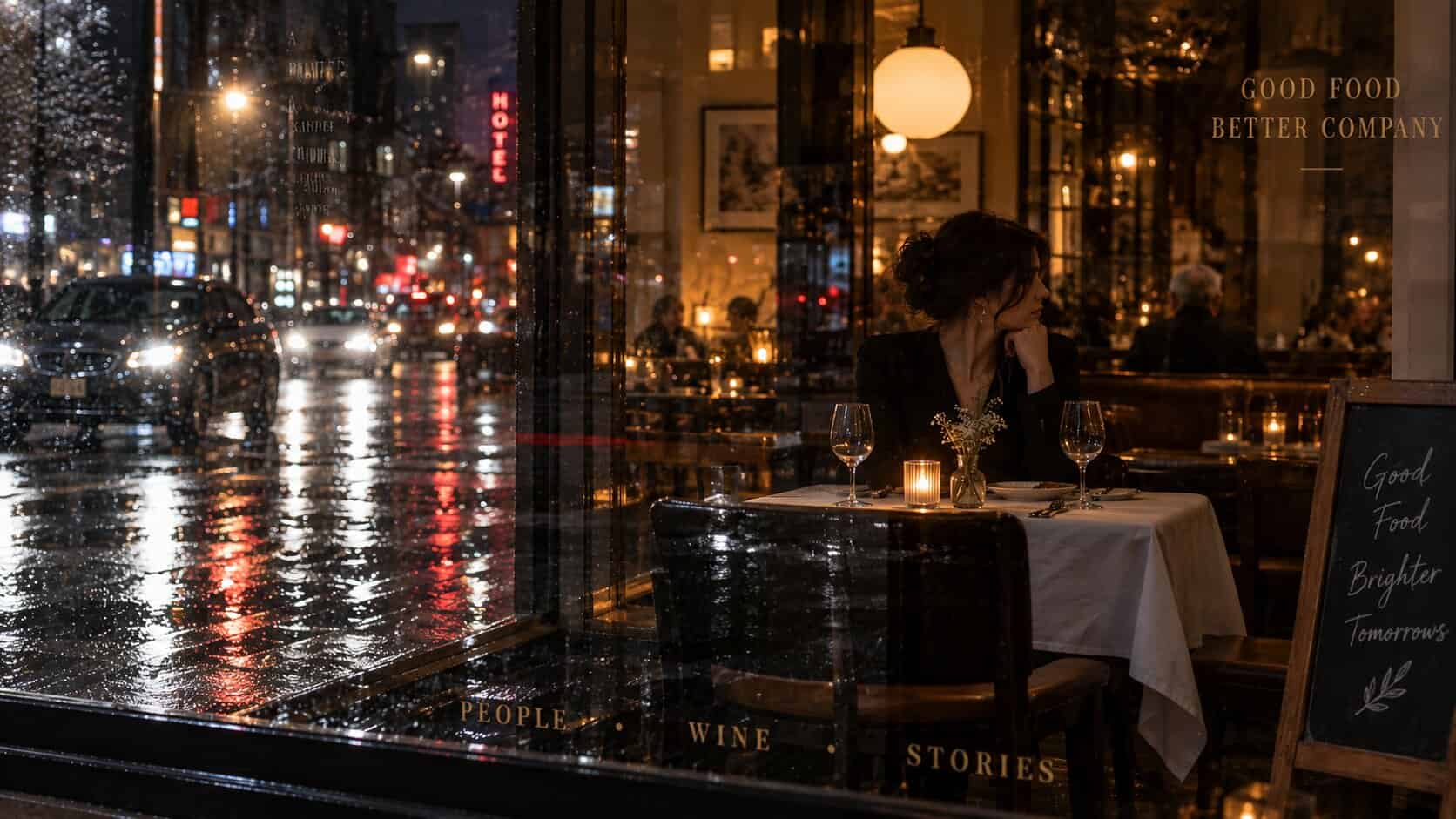
Wear something dark, in a fabric that survives two hours in a chair, cut to fit. That is what the evidence supports, and it is shorter than the advice usually is. Across 546 filmed first dates, people wore measurably more black than they had an hour earlier and no more blue at all. In a survey of 6,646 singles, the biggest turn-off named was not a garment: 66% said wrinkled clothes, ahead of every actual item on the list. Three complete looks below, six garments between them, from $808 at prices checked September 2026.
Which means the two things that decide a date outfit are the two things nobody can sell you.
0.49 vs 0.00
How much more black, and how much more blue, 546 real first-daters wore on the date than an hour before it
66%
Singles naming wrinkled clothes the biggest turn-off, ahead of every garment on the list
6
Garments behind the three looks below, filling ten slots, with no poplin shirt and no linen among them
What 546 people actually wore on a first date
Almost everything written about date clothes is somebody's preference. There is one piece of real evidence, and it is unusually clean. Robin Kramer and Jerrica Mulgrew took the British series First Dates, which films strangers meeting in a London restaurant, and compared what each of 546 daters wore on the date against what the same person wore in their pre-date interview. Same wardrobe, same person, an hour apart. Four raters who did not know what the study was looking for scored how much red, blue and black each of them had on.
| Colour | Change from interview to date | Effect size | What it means |
|---|---|---|---|
| Black | +0.49 | d = 0.35 | The largest move by some way. More black was worn than blue or red in both settings, by men and women alike. |
| Red | +0.15 | d = 0.19 | Real, and small. The authors question in the paper itself whether an increase that size matters in practice. |
| Blue | 0.00 | d = 0.00 | No movement at all. Blue was in the study as the control colour, and it behaved like one. |
Red is the colour this research usually chases, and red is the one that barely moved. Black moved three times as far. Given a wardrobe and a reason to look their best, people did not reach for a colour at all. They reached for the absence of one.
The honest caveat is that this measures what daters chose, not what worked, and the show is a restaurant in London rather than a bar in Chicago. But it is a within-person comparison at real scale, which is more than the genre has ever had. If you want to know what men are actually doing when it matters to them, that is the number.
The biggest turn-off is not a garment
Zoosk surveyed 6,646 of its members about what puts them off on a date. The top of the list is not a thing you own or fail to own.
| What singles named as a turn-off | Share | What it is actually about |
|---|---|---|
| Wrinkled clothes | 66% | Upkeep, and it costs nothing to fix. |
| Socks with sandals | 55% | A pairing, not a garment. |
| Crocs | 53% | The garment itself, and the only one in the top four. |
| Baggy clothes | 50% | Fit. |
| Board shorts or swimwear | 45% | The wrong register for the room. |
| Dressing too young for your age | 44% | Register again. |
| Trousers too short or too long | 39% | Fit, at the hem. |
Three of the top four are not about what you bought. A wrinkle is upkeep, socks with sandals is a pairing, baggy is fit. Only the Crocs are a purchase, and nobody reading this needs to be told about the Crocs.
Set that against what people do in the week before a date. TK Maxx polled over 2,000 people in the UK and found 52% typically buy a new outfit for a first date, at an average of £69.11. The same survey found the single biggest influence on what they chose was wanting to feel comfortable in clothes that fit, named by 41%. So the top reason for the choice and the top complaint about the result are the same thing, and it is not on sale anywhere.
This is the version of the argument that dividing a price by a number of wears keeps circling. A new shirt bought on Thursday has one wear in it and a crease down the front by nine. Something already in rotation has neither problem.
Dress for the two hours you spend sitting down
Derek Guy files first dates under smart casual, alongside museums and film screenings, and he is blunt about how that usually goes: the standard expression of it, a light oxford shirt and tropical wool trousers, is fine, but it often feels a little too close to business casual to be inspiring. That is the trap in one line. The safe date outfit is Tuesday at the office with better shoes.
The fix is not to dress up, it is to change what the clothes are made of. A date is two hours seated, which is the single worst thing you can do to a shirt. Proper Cloth's reference on wrinkle resistance sorts this by weave and fibre rather than by price.
| The usual answer for a date shirt | What it does after two hours at a table | What holds instead |
|---|---|---|
| Cotton poplin, sold as broadcloth too | Among the most wrinkle-prone dress shirt fabrics there is. Smooth, flat and light, so every fold shows. | A twill at the same weight. The diagonal weave packs denser and springs back. |
| Linen, or a cotton and linen blend | Creases naturally, and the crease-resistant finishes barely touch it. | Anything with wool woven into it, which resists creasing very well. |
| Oxford or pinpoint | A looser, more open weave than a twill of the same weight, so it gives sooner. | A fine merino knit, which needs no treatment at all to stay flat. |
Merino is the outlier worth knowing. Most cotton needs a chemical finish to stay flat, and merino needs no treatment at all. A fine-gauge merino crew neck is the one top that reads deliberate, sits well under artificial light, and cannot be creased by a chair. It is also, conveniently, black.
Formality still has to match across the outfit, and that check removes more combinations than colour ever does: on a real core wardrobe it rules out four looks in five. What it means here is narrow. Pick the level off the room, then keep the shoes on it.
Three dates, three looks, six garments
Drinks, dinner and a daytime coffee, built to both findings: dark, and nothing in them cut from a cloth that gives. Ten slots filled by six garments, not a poplin shirt or a linen anything among them, at prices checked in September 2026 and pulled from the MVRCK catalog, which is ours.
A bar, a first date
Drinks, and the look that needs nothing explained
Merino knit, black denim, black leather. Three garments, no collar to sit wrong and no fabric that creases where you fold at the waist. This is the look the study describes without meaning to: dark, plain, and reaching for black rather than for a colour.

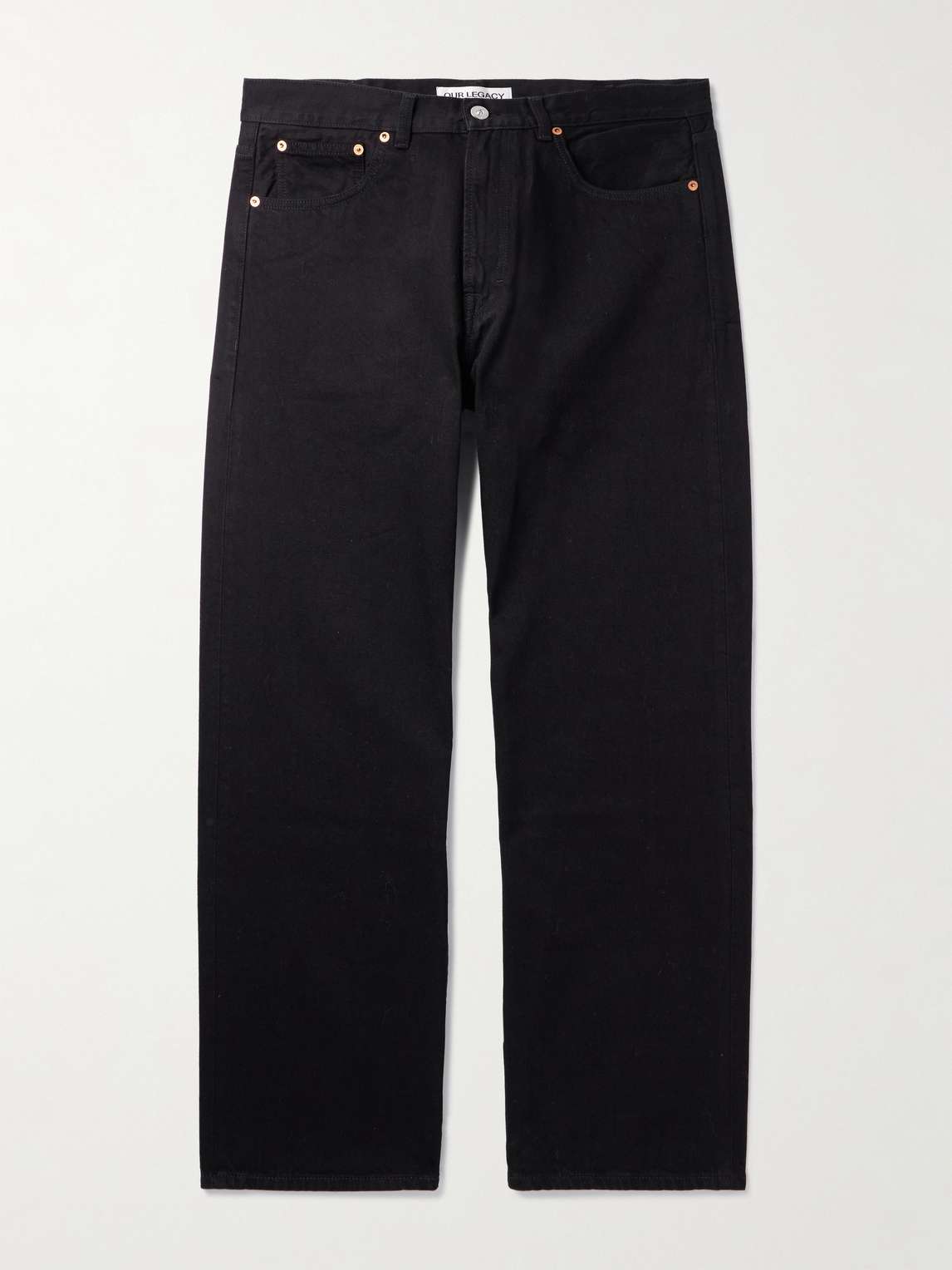

A table booked
Dinner, which is a swap and not a step up
Same sweater. The jeans become charcoal wool trousers, treated so they come out of a two-hour chair the way they went in, and the boots become black penny loafers. It costs $31 more than the drinks look, which is the point: a table booked somewhere good does not need a jacket, it needs the bottom half to change.


Coffee, a walk, a Saturday
Daytime, where the layer does the work
The drinks look with a navy cotton-flannel shirt jacket over it, which is the only garment here you do not already own by this point. Flannel is brushed, so it reads softer and more casual than the knit underneath, and that one step down is the whole difference between eight in the evening and eleven in the morning.

The three looks cost $808, $839 and $867. They span a bar, a restaurant and a Saturday morning, and the spread between the cheapest and the most expensive is $59, which is the price of the shirt jacket. Owning all six garments is $1,568. The sweater alone, at $138, is in every one of them.
That is the useful thing to take from a page like this. A date wardrobe is not three outfits, it is one anchor and two swaps. The anchor is the $138 sweater, second cheapest of the six and the only garment in all three looks, and the money sits in the shoes at $666 for the two pairs, which are also the pieces deciding which of the three rooms you are dressed for. A merino crew, dark jeans and leather boots also get past all twelve door policies we read, which is not a coincidence: dark, plain and leather is what rooms ask for after dark.
Which is most of why we built MVRCK the way we did. You ask in a sentence and the whole look comes back at real prices with live stock, bought through to the retailer. Photograph what you already own and it styles from that too, your wardrobe and the catalog mixed in one outfit. And you can put the black knit on your own avatar first, rather than spending $138 to find out whether the shoulder seam lands where it should.
Common questions
What should a guy wear on a date night?
Something dark, in a fabric that does not crease, cut to fit. A fine merino crew neck, dark jeans or wool trousers, and clean leather boots or loafers covers a bar, a restaurant and a daytime coffee between them. The reason to go dark is not taste: across 546 filmed first dates, people wore measurably more black than they had an hour earlier, and no more blue at all.
What should I wear on a first date?
Whatever you already look right in, pressed. In a survey of 6,646 singles the biggest turn-off named was wrinkled clothes at 66%, ahead of every actual garment on the list, and baggy clothes came fourth at 50%. Upkeep and fit take two of the top four places. Neither of them is something you buy.
What colour should I wear on a first date?
Black, if you want the answer the evidence gives. In the First Dates study the amount of black people wore rose by 0.49 on a 0 to 4 scale between the pre-date interview and the date, red rose 0.15, and blue did not move. Blue is the default answer, and the measurement says it is exactly that: a default, and not what people reach for when they are trying.
What should a man not wear on a first date?
Anything that will look slept in by the main course. Linen and cotton poplin are the two worst offenders, because both crease through normal wear and neither recovers. The garment answers are more obvious: 55% of singles named socks with sandals and 53% named Crocs, so the feet are worth a second look before you leave.
Do I need a blazer or a suit for a date night?
No. Derek Guy files first dates under smart casual, which sits well below a sport coat, and the dinner look on this page costs $31 more than the drinks look with no jacket in it at all. What changes between a bar and a booked table is the bottom half, not a layer added on top.
Is it worth buying a new outfit for a date?
Probably not, and it is a popular move: 52% of people say they typically buy something new for a first date, spending an average of £69.11. The two things the research says decide it are how the clothes fit and whether they are creased, and both of those are true of things already hanging in your wardrobe.
If you take one thing: pick the outfit tonight, put it on, and sit down in it for ten minutes. Everything the research says decides this is visible from a chair, and nothing it says decides this is visible on a hanger.
- Displaying Red and Black on a First Date: A Field Study Using the “First Dates” Television Series · Robin S. S. Kramer and Jerrica Mulgrew, Evolutionary Psychology
- Dating Data Study: Fashion and Dating · Zoosk
- First Date Fashion · TK Maxx
- What Makes a Fabric Wrinkle Resistant? · Carolyn Spalding, Proper Cloth
- How to Dress for the Reopening · Derek Guy, Put This On